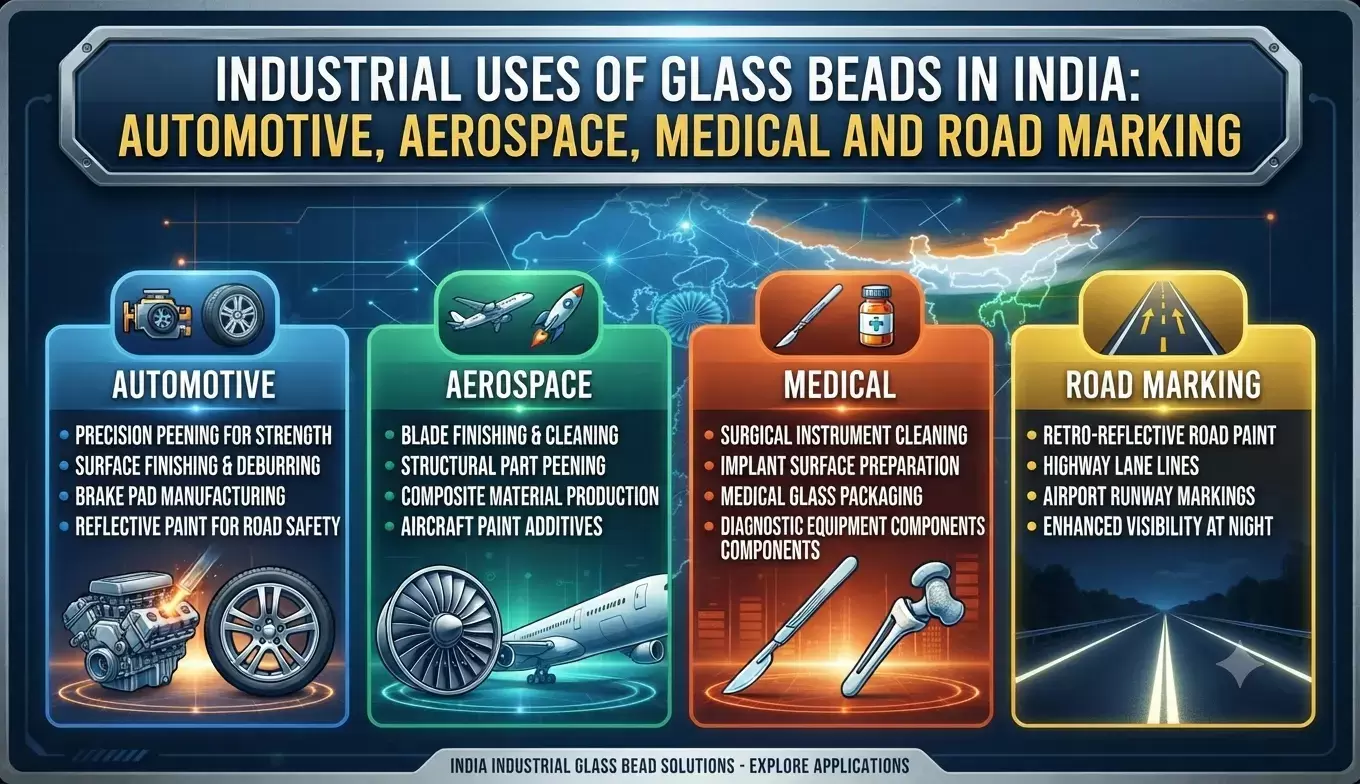
Glass beads are widely used across various industries in India because of their excellent surface finishing, cleaning, reflective, and abrasive properties. From automotive component manufacturing to aerospace engineering, medical equipment finishing, and road safety applications, industrial glass beads play an important role in modern manufacturing processes.
Their spherical shape, controlled hardness, and availability in different sizes make them suitable for applications requiring precision, consistency, and reliable performance.
With the growth of India's automotive, infrastructure, aerospace, and healthcare sectors, the demand for high-quality industrial glass beads is increasing. In this blog, we explore the major industrial uses of glass beads and their benefits across different industries.
What Are Industrial Glass Beads?
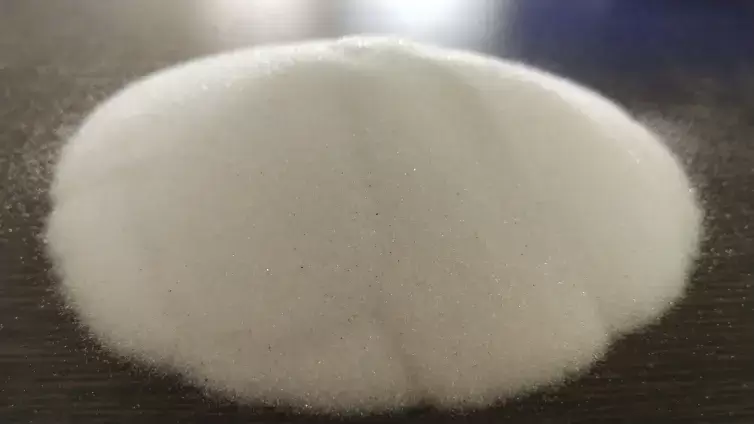
Industrial glass beads are small, spherical particles manufactured from glass, commonly soda-lime glass. They are used as abrasive blasting media, reflective materials, and finishing agents in different industrial processes.
Unlike angular abrasive media, spherical glass beads produce a controlled impact on surfaces, helping remove contaminants and create smooth, uniform finishes.
Depending on their size and specifications, glass beads are used for:
- Glass bead blasting and surface cleaning.
- Metal finishing and polishing.
- Shot peening applications.
- Reflective road marking.
- Precision cleaning of industrial components.
- Surface preparation before coating.
1. Automotive Industry: Cleaning and Finishing Vehicle Components
The automotive industry is one of the major users of glass bead blasting media in India. Automobile manufacturers and component suppliers use glass beads to clean, finish, and improve the appearance of different metal components.
Glass bead blasting is particularly useful for components made from aluminium, stainless steel, and other engineering metals.
Major automotive applications include:
- Engine Components: Cleaning engine parts, cylinder heads, and other metal components to remove surface contaminants.
- Transmission Parts: Improving the surface appearance of selected gearbox and transmission components.
- Aluminium Components: Producing uniform finishes on aluminium castings and automotive parts.
- Automotive Tools: Cleaning moulds, dies, and manufacturing tools.
- Metal Surface Finishing: Creating smooth, satin, and matte finishes on vehicle components.
Benefits for the automotive industry:
Glass bead blasting helps achieve consistent surface appearance, remove unwanted residues, and improve the presentation of automotive components. Properly selected glass beads can clean surfaces without unnecessarily damaging the base material.
2. Aerospace Industry: Precision Cleaning and Surface Treatment
The glass beads in the aerospace industry require high levels of precision, quality control, and reliability. Aircraft components are manufactured using materials such as aluminium alloys, stainless steel, titanium, and other specialised metals.
Glass beads are used in selected aerospace surface treatment processes where controlled cleaning and finishing are required.
Major aerospace applications include:
- Cleaning selected aircraft engine components.
- Surface finishing of aluminium alloy parts.
- Cleaning precision-machined metal components.
- Controlled surface treatment of aerospace assemblies.
- Supporting approved shot peening processes where suitable media specifications are met.
Benefits for aerospace manufacturing:
Glass bead blasting can provide uniform surface finishes and remove certain contaminants without the aggressive cutting action associated with angular abrasives. However, aerospace applications require strict process validation, approved media specifications, and contamination controls.
3. Medical Industry: Finishing Surgical and Medical Equipment
The medical equipment manufacturing industry uses specialised surface finishing techniques to achieve smooth, clean, and consistent component surfaces.
Glass bead blasting can be used for selected stainless steel and other metal medical equipment components, depending on the required surface specifications.
Common applications include:
- Finishing stainless steel surgical instrument components.
- Cleaning selected medical equipment parts.
- Producing uniform matte finishes on metal surfaces.
- Surface treatment of medical device housings.
- Finishing selected precision-machined healthcare components.
Benefits for medical equipment manufacturing:
Glass bead blasting helps create uniform surface textures and improve the visual appearance of metal components. The process must be properly controlled to avoid embedded abrasive particles and ensure compliance with applicable medical device cleanliness and safety requirements.
4. Road Marking Industry: Improving Night-Time Visibility
One of the most important applications of glass beads is road marking. Reflective glass beads are widely used in road safety systems to improve the visibility of road markings, especially at night.
These specialised glass beads are applied to wet road marking paint or thermoplastic road marking materials. They help reflect vehicle headlights back towards drivers through a process known as retroreflection.
Major road marking applications include:
- Highway lane markings.
- Road centre lines and edge lines.
- Pedestrian crossings.
- Parking area markings.
- Airport runway and taxiway markings.
- Traffic guidance and safety markings.
Benefits for road safety:
Reflective glass beads improve the visibility of road markings in low-light conditions. Their performance depends on bead quality, size distribution, embedment depth, application technique, and road surface conditions.
5. Metal Fabrication Industry: Surface Cleaning and Preparation
Metal fabrication companies use industrial glass beads for cleaning and finishing fabricated components.
Glass bead blasting is suitable for selected applications involving stainless steel, aluminium, and other metal surfaces.
Common applications include:
- Removing light surface contamination.
- Cleaning welded components.
- Finishing fabricated metal products.
- Creating uniform matte finishes.
- Cleaning metal enclosures and machine parts.
The process helps improve surface appearance while maintaining the underlying component geometry when appropriate blasting parameters are used.
6. Electronics and Precision Engineering Industry
Electronics and precision engineering manufacturers require accurate finishing and cleaning processes for selected metal components and housings.
Glass beads can be used for controlled surface treatment of suitable non-sensitive components.
Applications include:
- Finishing metal electronic enclosures.
- Cleaning selected aluminium housings.
- Surface treatment of precision-machined parts.
- Creating uniform decorative finishes.
- Cleaning selected industrial equipment components.
The correct bead size and blasting pressure are important to prevent damage to delicate parts.
7. Shipbuilding and Marine Industry
The marine and shipbuilding sectors use various abrasive blasting processes for component cleaning and surface preparation. Glass beads are suitable for selected cleaning and finishing applications where a relatively smooth surface is required.
Common applications include cleaning stainless steel fittings, finishing marine hardware, and treating selected metal components.
For heavy corrosion and thick coating removal, more aggressive abrasive materials may be more appropriate than glass beads.
Benefits of Using Industrial Glass Beads
| Benefits | Description |
|---|---|
| Uniform Surface Finish | Produces consistent matte, satin, and smooth finishes. |
| Controlled Cleaning | Removes selected contaminants without excessive cutting action. |
| Reusability | Can be recovered and reused multiple times in suitable blasting systems. |
| Versatility | Suitable for several industrial applications and materials. |
| Reduced Surface Damage | Spherical particles provide controlled impact when properly selected. |
| Reflective Properties | Specialised reflective glass beads improve road marking visibility. |
| Multiple Size Grades | Available in different particle sizes for specific applications. |
How to Choose the Right Industrial Glass Beads?
Selecting the right glass bead grade is important for achieving the desired industrial results. Consider the following factors before purchasing:
- Application: Identify whether the beads are required for blasting, shot peening, surface finishing, or road marking.
- Particle Size: Choose the correct size according to the required surface finish.
- Quality: Check bead shape, hardness, purity, and particle size consistency.
- Equipment Compatibility: Ensure the selected grade is suitable for your blasting machine and operating conditions.
- Supplier Reliability: Choose an experienced glass beads manufacturer that can provide consistent quality and dependable supply.
Conclusion
Industrial glass beads have become important materials across India's automotive, aerospace, medical, road marking, metal fabrication, electronics, and marine industries.
Their ability to support controlled cleaning, uniform surface finishing, and reflective road marking makes them valuable for a wide range of industrial applications.
Choosing the right glass bead size, grade, and quality is essential for achieving reliable results. If you are looking for high-quality industrial glass beads for blasting and surface finishing, explore the product range at Glass Beads Manufacturers in India. Airo Shot Blast Equipments offers glass bead solutions for diverse industrial requirements.