
Surface finishing plays an important role in manufacturing, automotive, aerospace, metal fabrication, and other industries. A properly finished surface not only improves the appearance of a component but can also enhance its performance and durability. One popular surface treatment technique used across these industries is glass bead blasting.
Glass bead blasting is a non-destructive abrasive blasting process that uses tiny spherical glass beads to clean, polish, and improve the surface of different materials. Unlike aggressive abrasive blasting methods, this technique produces a smooth, satin-like finish without significantly damaging the underlying material.
But how does glass bead blasting work? What are its advantages, and what limitations should manufacturers consider? Let's explore the complete process.
What Is Glass Bead Blasting?
Glass bead blasting is a mechanical surface finishing process in which spherical glass particles, small glass beads, are propelled at high speed onto a material's surface using compressed air or specialized blasting equipment.
The impact of these glass beads removes surface contaminants, light rust, oxidation, and minor imperfections while creating a uniform, smooth finish.
The glass beads are generally manufactured from lead-free, chemically inert glass. Their rounded shape makes them less aggressive than sharp-edged abrasives such as aluminum oxide or silicon carbide.
This makes glass bead blasting suitable for applications where maintaining the original dimensions, structural integrity, and appearance of a component is important.
It is commonly used for stainless steel, aluminum, brass, copper, and other metal components.
How Does the Glass Bead Blasting Process Work?
The glass bead blasting process involves several steps to achieve consistent surface cleaning and finishing.
1. Surface Preparation
Before blasting begins, the component is inspected to identify dirt, grease, oil, rust, or other contaminants. Any heavy grease or oil should be removed using an appropriate cleaning method.
Proper preparation helps ensure uniform blasting results and prevents contamination of the blasting media.
2. Selection of Glass Bead Media
Choosing the correct glass bead size is essential for achieving the desired surface finish.
- Fine glass beads are suitable for delicate components and smooth finishes.
- Micro glass beads are commonly used for general cleaning and finishing.
- Coarser beads provide a more noticeable surface texture and greater cleaning action.
The appropriate bead size depends on the material, component geometry, and required surface roughness.
3. Blasting Operation
The glass beads are loaded into a blasting machine or cabinet. Compressed air propels the beads through a nozzle toward the workpiece.
The operator controls factors such as air pressure, sand blasting nozzle distance, blasting angle, and exposure time.
When the glass beads strike the surface, they loosen contaminants and produce a uniform finish through controlled impact.
4. Surface Cleaning and Inspection
After blasting, the component is cleaned to remove remaining glass particles and dust.
The finished surface is inspected for uniformity, cleanliness, and any unwanted damage. Depending on the application, additional finishing or protective treatments may follow.
5. Media Recovery and Reuse
Many industrial glass bead blasting systems include media recovery and recycling mechanisms.
Reusable glass beads are collected, screened, and separated from dust or broken particles before being returned to the blasting system. This improves media utilization and reduces operating waste.
Key Benefits of Glass Bead Blasting
Glass bead blasting offers several advantages, making it a preferred surface finishing technique for many industrial applications.
1. Smooth and Uniform Surface Finish
One of the biggest benefits of glass bead blasting is its ability to produce a clean, consistent, satin-like finish. The spherical shape of the beads creates a relatively uniform surface texture without leaving the aggressive scratches associated with angular abrasives.
2. Non-Aggressive Surface Treatment
Glass beads are comparatively gentle blasting media. They clean and finish surfaces without excessive material removal when the process is properly controlled.
This makes them suitable for delicate components, precision-machined parts, and thin metal surfaces.
3. Improved Aesthetic Appearance
Glass bead blasting removes stains, discoloration, and minor surface imperfections, giving metal components a clean and professional appearance.
It is particularly popular for stainless steel products, automotive parts, decorative metal components, and architectural hardware.
4. Environmentally Friendly Media
Glass beads are generally manufactured from glass and are chemically inert. They do not introduce metallic contamination into the workpiece.
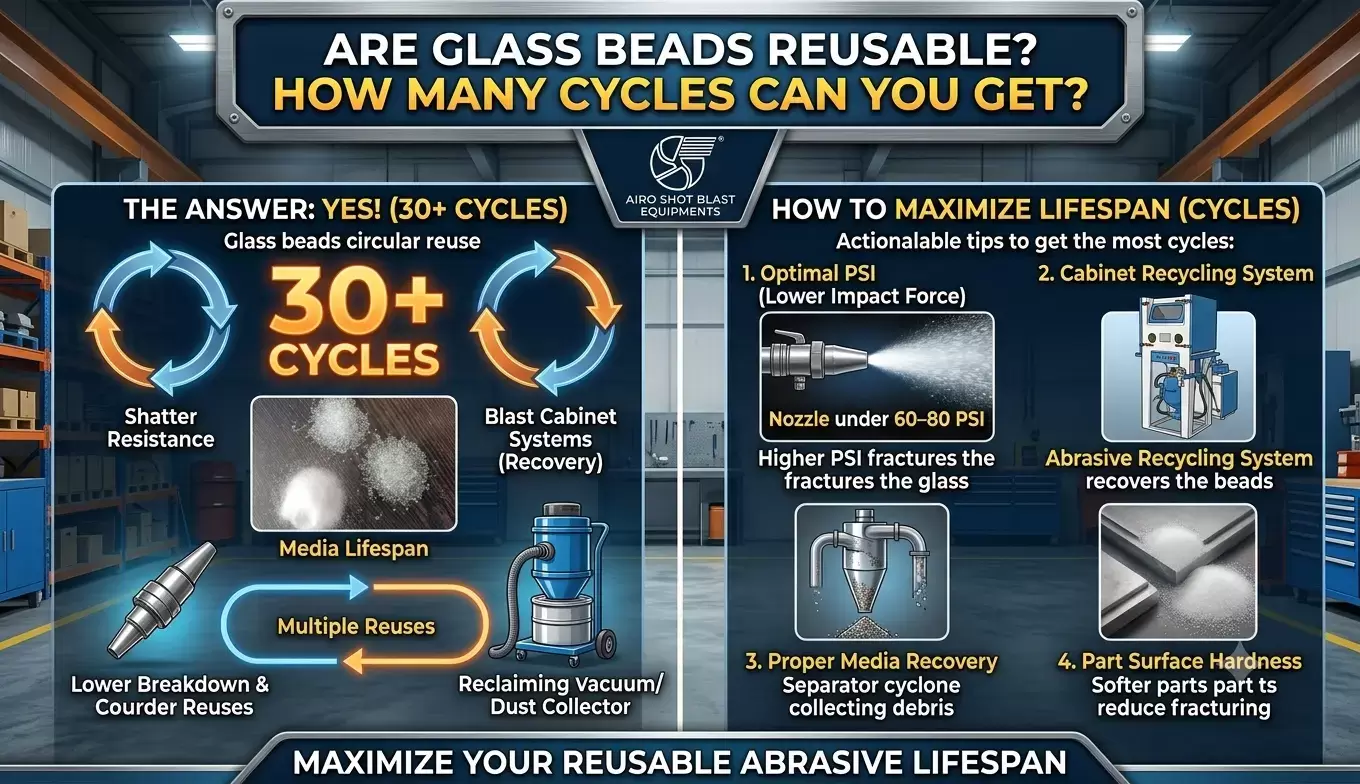
They can also be recycled multiple times, depending on operating conditions and media quality. However, dust collection and responsible waste disposal remain important.
5. Suitable for Different Materials
Glass bead blasting works with various materials, including:
- Stainless steel
- Aluminum
- Brass
- Copper
- Titanium
- Certain plastic components
The blasting parameters must be adjusted according to the material's hardness, thickness, and surface requirements.
6. Removes Surface Contaminants
The process effectively removes light rust, oxidation, scale, dirt, and other surface contaminants. It can also eliminate minor burrs and improve the overall appearance of machined components.
However, it is not intended to replace aggressive abrasive blasting when heavy corrosion or thick coatings must be removed.
Limitations of Glass Bead Blasting
Although glass bead blasting provides several advantages, it also has certain limitations that manufacturers should understand before selecting this process.
1. Not Suitable for Heavy Rust Removal
Glass beads are relatively mild abrasives. They may not effectively remove heavy rust, thick mill scale, or stubborn industrial coatings.
For these applications, more aggressive media such as aluminum oxide or steel grit may be more suitable.
2. Limited Surface Profiling
Glass bead blasting generally produces a smoother finish rather than a deep surface profile.
Therefore, it may not be the best option when a rough texture is required for strong paint or coating adhesion.
3. Media Breakage
Although glass beads can be reused, repeated impacts eventually cause them to fracture into smaller particles.
Broken media generate dust and reduce blasting efficiency. Regular media inspection, screening, and replacement are necessary.
4. Requires Proper Equipment and Control
The quality of the finished surface depends on several operating factors, including air pressure, bead size, blasting distance, and exposure time.
Incorrect settings may cause uneven finishes, excessive surface deformation, or unwanted changes in the material's appearance.
5. Safety Considerations
Glass bead blasting produces airborne dust and fine particles, particularly when used in poorly controlled environments.
Industrial operations should use suitable blasting cabinets, ventilation, dust extraction systems, protective clothing, and appropriate respiratory protection.
Glass Bead Blasting vs. Other Abrasive Blasting Methods
Different abrasive blasting methods serve different surface finishing requirements.
|
Blasting method |
Main purpose |
Surface result |
|---|---|---|
|
Glass bead blasting |
Cleaning and polishing |
Smooth, satin finish |
|
Sand blasting |
General surface cleaning |
Depends on abrasive |
|
Aluminum oxide blasting |
Aggressive cleaning and profiling |
Rougher surface |
|
Steel grit blasting |
Heavy rust and scale removal |
Coarse surface profile |
|
Soda blasting |
Gentle cleaning |
Minimal surface abrasion |
The right method depends on the workpiece material, contamination level, desired surface roughness, and final application.
Common Applications of Glass Bead Blasting
Glass bead blasting is widely used in industries that require controlled cleaning and attractive surface finishes.
- Automotive industry: Used for cleaning engine components, aluminum parts, brackets, and other metal surfaces.
- Aerospace industry: Helps clean and finish selected precision components where controlled surface treatment is essential.
- Medical equipment manufacturing: Used for finishing compatible stainless steel instruments and equipment components.
- Metal fabrication: Improves the appearance of stainless steel, aluminum, and fabricated metal products.
- Marine industry: Helps clean and finish compatible metal fittings and hardware.
- Manufacturing industry: Used for deburring, cleaning, and surface finishing of machined components.
Factors to Consider Before Choosing Glass Bead Blasting
Before selecting glass bead blasting, manufacturers should evaluate the following factors:
- Material type: Check whether the component can withstand the selected blasting pressure.
- Required surface finish: Determine whether a smooth, satin, or textured finish is needed.
- Contamination level: Identify whether the surface contains light oxidation or heavy rust.
- Glass bead size: Select suitable media according to the required finish.
- Operating pressure: Use controlled pressure to avoid damaging delicate components.
- Production requirements: Consider equipment capacity, media consumption, and processing time.
A proper assessment helps achieve consistent finishing results while reducing unnecessary costs and material damage.
Conclusion
Glass bead blasting is an effective surface finishing technique for cleaning, polishing, and improving the appearance of metal components. Its ability to produce a smooth, uniform finish with relatively low material removal makes it valuable across automotive, aerospace, medical, and manufacturing industries.
However, it is not suitable for every application. Heavy rust removal, aggressive coating removal, and deep surface profiling may require alternative abrasive blasting methods.
By selecting the right glass bead size, equipment, and operating parameters, glass bead manufacturers can achieve reliable surface finishing results and improve the overall quality of their products.