Stainless steel is widely used across industries because of its excellent corrosion resistance, durability, strength, and attractive appearance. However, achieving the right surface finish is equally important when manufacturing stainless steel components. Whether used in architectural applications, automotive parts, food processing equipment, or industrial machinery, the surface texture can significantly influence the product's appearance, functionality, and maintenance requirements.
One of the most effective methods of achieving a uniform, attractive surface is glass bead blasting for stainless steel finishing. This surface treatment technique uses fine spherical glass beads to create a smooth, non-reflective matte or satin finish without aggressively removing the base material.
In this blog, we will explore how glass beads work, their benefits, applications, and best practices for achieving professional stainless steel surface finishes.
What Is Glass Bead Blasting for Stainless Steel?
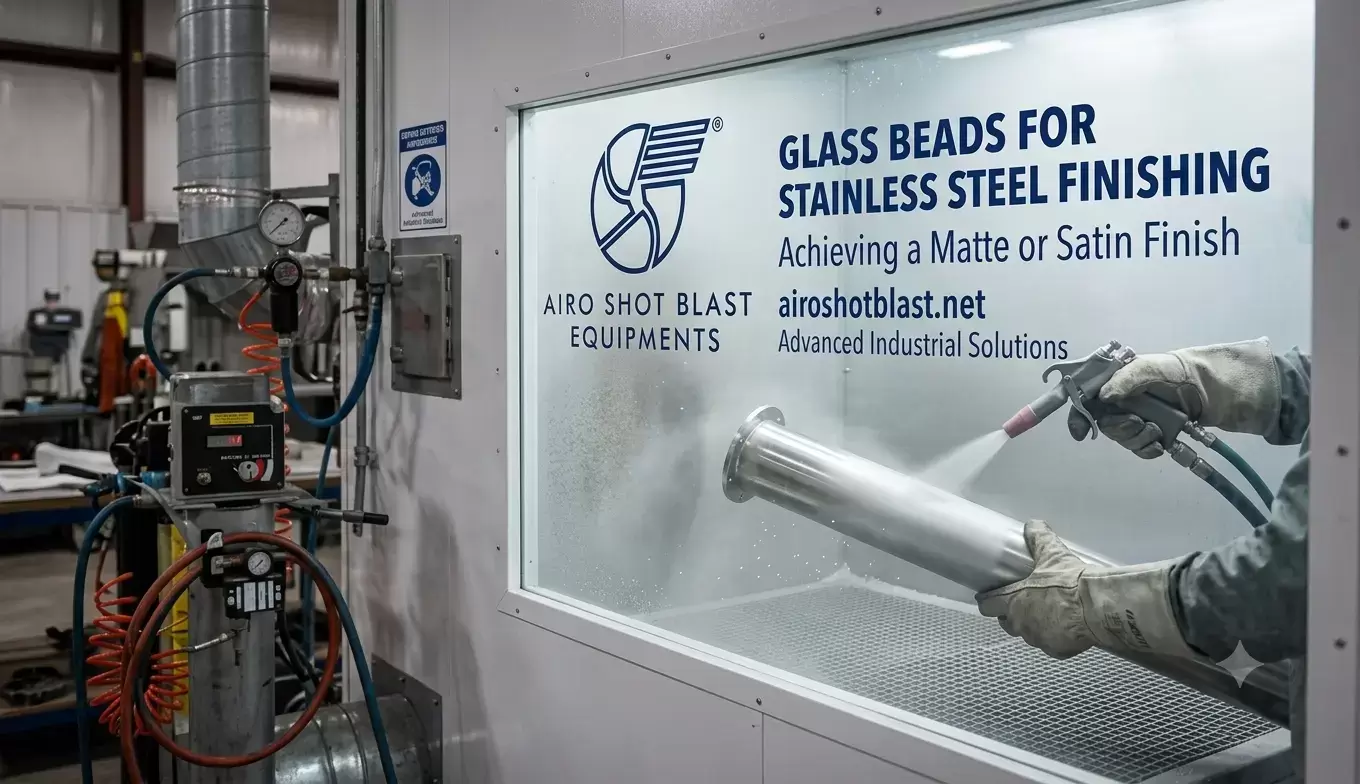
Glass bead blasting is a mechanical surface finishing process in which small, spherical glass particles are propelled against a stainless steel surface using compressed air or specialized blasting equipment.
Unlike abrasive materials that cut or aggressively remove surface layers, glass beads primarily produce a controlled peening action. Their rounded shape helps create a consistent surface texture while minimizing material removal when properly applied.
The process is commonly used for:
- Creating matte stainless steel finishes.
- Achieving uniform satin surface textures.
- Removing light surface imperfections.
- Eliminating minor discoloration and superficial contamination.
- Improving the visual consistency of stainless steel components.
- Preparing surfaces for subsequent finishing operations.
The final appearance depends on several factors, including glass bead size, blasting pressure, sand blasting nozzle distance, blasting angle, and exposure time.
How Glass Beads Create a Matte or Satin Finish
Glass bead blasting transforms the naturally reflective surface of stainless steel into a softer, more uniform appearance.
During blasting, spherical glass particles impact the metal surface and create numerous tiny indentations. These microscopic surface changes diffuse reflected light rather than allowing it to reflect in one concentrated direction.
As a result, the stainless steel develops a non-directional, low-gloss appearance.
- Matte Finish: A matte finish has a relatively low level of reflectivity. It provides a subtle, understated appearance and is suitable for applications where glare reduction and a uniform surface texture are important.
- Satin Finish: A satin finish offers a slightly smoother-looking appearance with a gentle sheen. It provides a balance between a polished and matte surface, making it popular for decorative and architectural applications.
By adjusting the blasting parameters and selecting the appropriate glass bead size, manufacturers can achieve different levels of surface texture and visual appearance.
Choosing the Right Glass Bead Size for Stainless Steel
Selecting the correct glass bead size is essential for obtaining the desired surface finish. Different bead sizes produce different textures and finishing results.
Here is how bead size influences stainless steel finishing:
| Glass Bead Size | Typical Finishing Result |
|---|---|
| Fine glass beads | Softer, finer matte appearance |
| Micro glass beads | Uniform satin or matte texture |
| Coarse glass beads | More pronounced textured appearance |
Fine glass beads are generally preferred when a smooth, subtle finish is required. Medium-sized beads are suitable for general-purpose stainless steel finishing, while larger beads can create a more noticeable surface texture.
The correct size should always be selected according to the material grade, component geometry, and required surface roughness.
Benefits of Using Glass Beads for Stainless Steel Finishing
Glass bead blasting offers several advantages over conventional abrasive blasting techniques.
1. Uniform Surface Appearance
One of the biggest advantages of glass bead blasting is its ability to create a consistent finish across stainless steel components. It helps eliminate variations in surface appearance and produces a professional matte or satin texture.
2. Minimal Material Removal
Because glass beads have a spherical shape, they generally produce less aggressive surface action than sharp-edged abrasives. This makes them suitable for finishing precision components where dimensional accuracy must be maintained.
3. Improved Aesthetic Appeal
A matte or satin stainless steel finish gives products a clean, modern, and premium appearance. It is particularly desirable in architectural designs, decorative panels, kitchen equipment, and consumer products.
4. Reduced Surface Glare
Highly polished stainless steel can produce unwanted reflections under bright lighting. Glass bead blasting reduces surface reflectivity, making finished components more visually comfortable in commercial and industrial environments.
5. Effective Surface Cleaning
Glass beads can help remove light oxide residues, superficial contaminants, and minor surface imperfections. However, they should not be considered a substitute for chemical descaling or dedicated corrosion-removal processes.
6. Reusable Blasting Media
High-quality glass beads can often be recycled through suitable blasting equipment. Their durability and recyclability make them a practical option for industrial surface finishing operations.
Applications of Glass Bead Blasting on Stainless Steel
Glass bead blasting is widely used in industries where both surface quality and appearance matter.
- Architectural and Construction Industry: Stainless steel handrails, elevator panels, decorative sheets, fixtures, and architectural components often use satin or matte finishes for a sophisticated appearance.
- Automotive Industry: Stainless steel exhaust components, trims, brackets, and selected precision parts may undergo glass bead blasting to achieve a uniform surface texture.
- Food Processing and Pharmaceutical Equipment: Stainless steel tanks, fittings, housings, and machine components may be bead blasted to achieve specific surface characteristics. However, hygienic applications require validated surface roughness, appropriate cleaning procedures, and compliance with relevant industry standards.
- Medical Equipment Manufacturing: Certain stainless steel instruments and equipment housings use bead blasting to achieve controlled, non-reflective finishes.
- Industrial Machinery: Pumps, valves, housings, and mechanical components benefit from glass bead blasting when consistent appearance and surface preparation are required.
Glass Bead Blasting vs. Other Stainless Steel Finishing Methods
Different surface finishing techniques produce different results. Understanding their differences helps manufacturers select the most suitable process.
| Finishing Method | Surface Appearance | Main Purpose |
|---|---|---|
| Glass bead blasting | Matte or satin | Uniform, non-directional finish |
| Sandblasting | Textured or rough | Aggressive cleaning and surface preparation |
| Mechanical polishing | Bright and reflective | Smooth, polished appearance |
| Brushing | Directional sati | Linear decorative texture |
| Electropolishing | Smooth and bright | Surface leveling and improved cleanliness |
Glass bead blasting is particularly useful when a manufacturer wants to achieve a consistent, non-directional finish without creating the highly reflective appearance associated with mechanical polishing.
It is important to remember that glass bead blasting does not automatically improve corrosion resistance. Proper media selection, equipment cleanliness, and post-blasting treatment remain essential.
Best Practices for Achieving a High-Quality Matte or Satin Finish
To achieve reliable finishing results, manufacturers should follow appropriate blasting procedures.
1. Clean the Stainless Steel Surface
Remove oil, grease, dust, and other contaminants before blasting. Surface contamination can interfere with the finishing process and cause inconsistent results.
2. Select High-Quality Glass Beads
Use clean, spherical glass bead media with a consistent particle size distribution. Contaminated or broken media can negatively affect the surface appearance.
3. Maintain Appropriate Blasting Pressure
Use controlled air pressure according to the required finish and component specifications. Excessive pressure may create unwanted roughness, distortion, or surface damage.
4. Maintain Consistent Nozzle Distance
Keep the blasting nozzle at a consistent distance and angle. Uniform movement helps prevent patchy finishing and uneven surface textures.
5. Avoid Cross-Contamination
Use dedicated blasting equipment and clean media for stainless steel applications. Contamination from carbon steel particles can introduce free iron onto stainless steel surfaces and increase the risk of rust staining.
6. Inspect the Finished Surface
Evaluate the finished component under consistent lighting. Where required, measure surface roughness using suitable instruments to verify compliance with project specifications.
How to Maintain Stainless Steel After Glass Bead Blasting
Proper post-blasting care helps preserve the appearance and performance of stainless steel.
After blasting, components should be thoroughly cleaned to remove residual glass particles and dust. Use appropriate cleaning agents that are compatible with the stainless steel grade.
Avoid chloride-containing cleaners and contaminated tools that may cause surface corrosion.
For applications with demanding corrosion or hygiene requirements, consider an appropriate passivation process following the applicable specifications. Passivation is not automatically required after every bead blasting operation, but it may be beneficial depending on the application and processing conditions.
Regular cleaning with non-abrasive materials will help maintain the matte or satin appearance over time.
Conclusion
Glass beads are an excellent choice for achieving controlled matte and satin finishes on stainless steel components. Their spherical shape, consistent finishing action, and ability to produce uniform surface textures make them suitable for a wide range of industrial, architectural, automotive, and decorative applications.
By selecting the correct glass bead size, maintaining appropriate blasting pressure, preventing cross-contamination, and following proper cleaning procedures, manufacturers can achieve attractive and consistent stainless steel finishes.
Whether your goal is to create a subtle matte appearance or a refined satin texture, glass bead blasting offers a versatile and effective stainless steel surface finishing solution.